
Email us today!


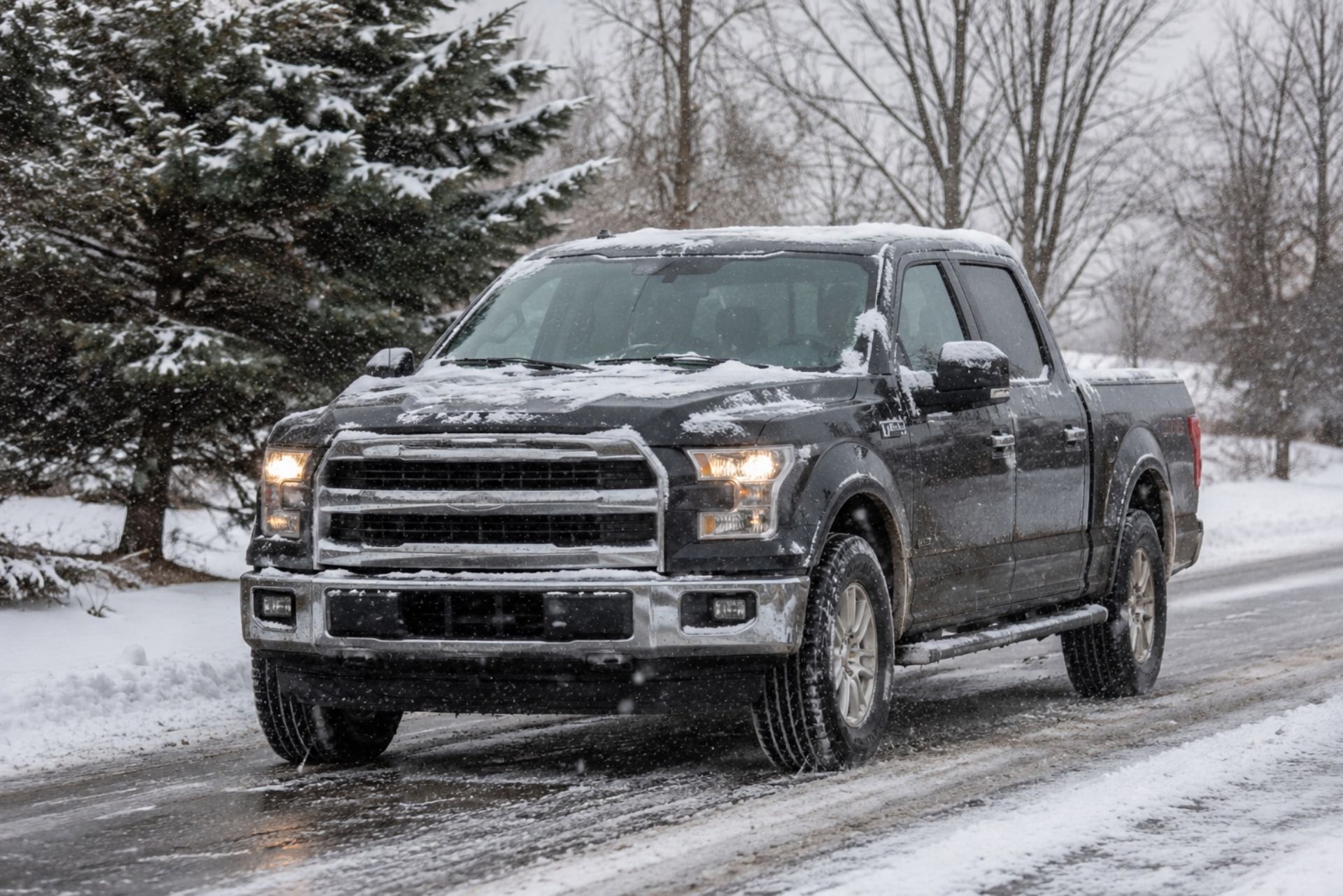
Picture a contractor in Grand Rapids pulling a loaded equipment trailer behind an F-150 on a February morning, when a deer steps onto US-131 and the truck slides into a guardrail. Whether that morning ends with a minor inconvenience or a financial setback depends almost entirely on decisions made months earlier, when the policy was written. Insuring a Ford F-150 in Michigan involves more moving parts than insuring a typical sedan, because the truck often works as hard as its owner does.
Michigan's no-fault system, its unusual collision options, and the truck's popularity with thieves create a set of choices that F-150 owners in other states never face. You need to understand how personal injury protection, liability limits,
physical damage coverage, and equipment protection fit together so your truck, your passengers, and your livelihood are properly protected. The sections below walk through each of those coverage decisions in the order you will typically encounter them when you request a quote, with practical observations drawn from the claims that Michigan truck owners most often file.
Insuring Michigan's Favorite Truck: The F-150 Landscape
The F-150 is everywhere in Michigan, from Dearborn driveways to job sites in Traverse City, and insurers price that popularity into every policy they write. Michigan remains one of the most expensive states in the country for auto coverage, and the F-150 is no exception. The average annual premium for a Ford F-150 in Michigan runs roughly $2,880 to $3,073, well above the national average of about $1,862 for the same truck.
Several factors push F-150 premiums higher in Michigan than elsewhere. The truck's aluminum body panels and advanced driver assistance sensors make even moderate repairs costly, and replacement parts for higher trims such as the Lariat, Platinum, and Raptor carry premium prices. The 2026 F-150 holds a 5-star NHTSA safety rating, which helps on the injury side, but high theft rates in metropolitan areas like Detroit continue to drive up comprehensive premiums for owners in Wayne, Oakland, and Macomb counties.
There is some encouraging news for 2026. State Farm implemented a 4.9% rate decrease for 1.3 million policyholders effective February 2026, a sign that the post-reform market continues to adjust. That said, individual rates still vary widely by ZIP code, driving record, credit-based insurance score, and how you use the truck.
One of the most common mistakes we see is an owner who uses the F-150 for both family driving and occasional paid work while carrying only a personal policy. If the truck regularly hauls tools, materials, or crews for a business, you should discuss business use with an agent, because a personal policy may exclude claims that arise while the truck is working. A tailored review of how you actually use the truck is the best starting point for any quote.
By: John G. Growney
President of Oakland Insurance
Michigan's no-fault law requires every registered vehicle to carry three core coverages: personal injury protection (PIP), property protection insurance (PPI), and residual bodily injury and property damage liability. The no-fault structure means that, after a crash, your own insurer pays your medical expenses and certain lost wages regardless of who caused the accident. This design reduces lawsuits over minor injuries, but it also places much of the financial responsibility on your own policy.
Property protection insurance is the Michigan coverage F-150 owners often overlook. State law mandates $1 million in Property Protection Insurance to cover damage your vehicle causes to other people's property, including buildings, fences, and properly parked vehicles. For a full-size pickup that can easily take out a storefront or a mailbox row on an icy morning, that protection matters.
Personal Injury Protection (PIP) Choice Levels
Since the 2019 reforms, Michigan drivers can choose from six PIP medical options, including Unlimited coverage, capped benefits of $500,000 or $250,000, and specific opt-outs for people who have Medicare Parts A and B. Lower limits reduce your premium, but they also shift more risk onto your health insurance and your personal savings.
The choice deserves careful thought if you drive a truck for work. Your health plan may have exclusions for auto injuries or high deductibles, and serious crash injuries can exceed a $250,000 cap quickly. Lawmakers continue to revisit these rules, and Senate Bill 1208 proposed raising the maximum annual health insurance deductible to $6,579 for drivers who want to opt out of PIP medical coverage. Note that this was a proposal, so confirm current eligibility rules before you select an opt-out.
PIP also includes wage and survivor benefits. Effective October 1, 2026, the maximum monthly benefit for work loss and survivors' loss is capped at $7,455 per 30-day period, which is an important figure for self-employed tradespeople who rely on their own income.
The Role of the Michigan Catastrophic Claims Association
The Michigan Catastrophic Claims Association (MCCA) reimburses insurers for the most severe, long-term injury claims under unlimited PIP. Every policy that carries unlimited PIP medical coverage includes a per-vehicle MCCA assessment, which appears as a separate line on your declarations page.
If you select a capped PIP level or an opt-out, the MCCA assessment generally does not apply, which is one reason those options cost less. The trade-off is that you lose access to lifetime medical protection for catastrophic injuries. You should weigh that savings against the realistic cost of a spinal cord or traumatic brain injury before deciding.
Liability Limits for F-150 Owners
Liability coverage protects you when you cause an accident that injures other people or damages their property outside of Michigan's PPI protections. Under Michigan law, the default bodily injury liability limits are $250,000 per person and $500,000 per accident. Drivers may opt down to $50,000 per person and $100,000 per accident by signing a waiver, but this choice deserves real caution.
Here is why the default limits matter for truck owners in particular. A loaded F-150 weighs considerably more than most passenger cars, and in a collision with a compact vehicle, the injuries to the other occupants tend to be more severe. Under the reformed no-fault system, injured parties can pursue you for medical costs that exceed their own PIP choice, as well as for pain and suffering when the injury meets the legal threshold. If your limits are too low, the shortfall can come from your personal or business assets.
Consider these points when you set liability limits:
- Asset exposure: If you own a home, a business, or significant savings, the default limits or higher are usually appropriate.
- Business use: Contractors who drive to multiple job sites daily spend more time on the road and face more exposure.
- Umbrella eligibility: Most personal umbrella policies require underlying limits of at least $250,000/$500,000, so opting down can disqualify you.
- Out-of-state travel: Michigan liability coverage follows you when you tow a camper to Ohio or Indiana.
Michigan also allows limited property damage liability, commonly known as mini-tort, which covers the other driver's out-of-pocket vehicle repair costs when you are at fault. Ask your agent how mini-tort applies to your policy before you sign anything.
Protecting Your Asset: Collision and Comprehensive Coverage
Collision and comprehensive coverage protect the truck itself, and for most F-150 owners these coverages represent a substantial part of the premium. If you finance or lease the truck, your lender will almost certainly require both. If you own the truck outright, the decision depends on its value and your ability to replace it without insurance.
Broadened vs. Standard Collision in Michigan
Michigan is unusual because it offers three collision options instead of one. Limited collision pays for damage to your truck only when you are not substantially at fault. Standard collision pays regardless of fault, but you always pay your deductible. Broadened collision also pays regardless of fault, and it waives your deductible when you are not substantially at fault.
For a newer F-150 with costly aluminum panels and camera systems, broadened collision usually offers the strongest value. Michigan's no-fault law limits your ability to recover vehicle damage from the at-fault driver, so the right collision option often determines whether your truck gets repaired without a lengthy fight. A common client mistake is selecting limited collision to save money, then discovering after a parking lot incident that fault cannot be established.
Comprehensive Claims: Deer Strikes and Glass Damage
Comprehensive coverage handles damage that does not result from a collision with another vehicle or object, including theft, vandalism, hail, falling trees, flooding, and animal strikes. In Michigan, deer collisions fall under comprehensive rather than collision, which usually means a lower deductible and no fault determination.
Deer strikes are one of the most frequent claims Michigan truck owners file, particularly in the fall rut season along rural routes in northern Lower Michigan and the Upper Peninsula. Windshield damage is another frequent claim, and on newer F-150 models a windshield replacement often requires recalibrating the forward-facing camera used for lane keeping and automatic braking. Ask whether your policy offers full glass coverage or a reduced glass deductible, because that small add-on can pay for itself with a single cracked windshield.
Coverage for Towing, Hauling, and Custom Equipment
The F-150 is built to work, and many Michigan owners use it to tow boats, campers, snowmobiles, and equipment trailers. Standard auto policies were not designed with heavily modified or working trucks in mind, so you need to confirm that your policy reflects how the truck is actually equipped and used.
Insuring Aftermarket Parts and Modifications
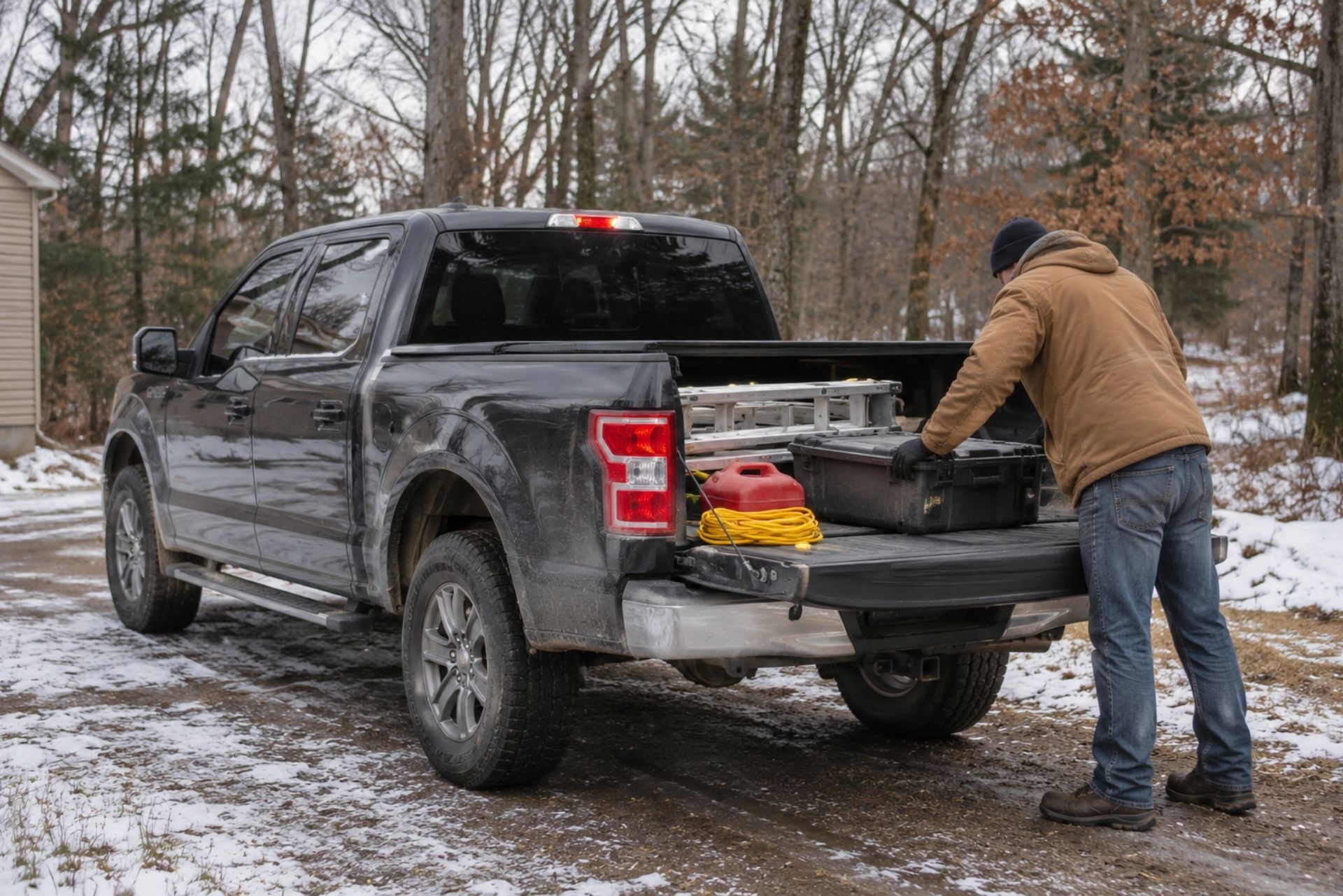
Most personal auto policies cover only a limited amount of custom equipment unless you schedule it separately. Lift kits, upgraded wheels and tires, light bars, tonneau covers, bed liners, ladder racks, toolboxes, and aftermarket bumpers can add thousands of dollars to the truck's value. If those items are not declared, a total loss settlement may reflect only the factory configuration.
Tools and equipment stored in the truck bed are a separate issue entirely. Auto policies generally do not cover tools, which means a contractor who has a toolbox stolen from a job site in Novi may find no coverage under the auto policy at all. Business owners typically need an inland marine or tools and equipment policy for this exposure.
Roadside Assistance and Trailer Coverage
Roadside assistance covers towing, jump starts, flat tire changes, lockouts, and fuel delivery, and it is usually inexpensive to add. For an F-150 owner stranded on I-75 in January, it is one of the most practical coverages available.
Trailer coverage requires closer attention. Liability coverage generally extends from your truck to a trailer you are towing, but physical damage to the trailer itself typically requires the trailer to be listed on the policy or insured separately. Boats and campers often need their own policies, and cargo inside a trailer is rarely covered under auto insurance. Before your next trip, ask your agent to confirm in writing how your trailer and its contents are protected.
The table below compares the main coverage choices for Ford pickup owners in Michigan, so you can see how each option affects protection and cost.
| Coverage | Basic Option | Stronger Option | What You Gain |
|---|---|---|---|
| PIP Medical | $250,000 cap or opt-out | Unlimited | Lifetime care for catastrophic injuries |
| Bodily Injury Liability | $50,000/$100,000 (waiver) | $250,000/$500,000 or higher | Protection for personal and business assets |
| Property Protection (PPI) | $1 million (required) | Same | Covers damage to buildings and parked cars |
| Collision | Limited | Broadened | Deductible waived when not at fault |
| Comprehensive | High deductible | Low deductible plus glass | Lower cost for deer and windshield claims |
| Custom Equipment | Default limit | Scheduled coverage | Full value for lifts, racks, and wheels |
| Roadside Assistance | None | Included | Towing and winter breakdown help |
As the table shows, the cheapest version of each coverage often leaves meaningful gaps, especially for owners who use the truck for work. The strongest value tends to come from broadened collision, adequate liability limits, and scheduled equipment coverage, since those address the claims Michigan F-150 owners file most often. A tailored quote lets you see the actual price difference for each upgrade rather than guessing.
Your deductible is the amount you pay out of pocket before collision or comprehensive coverage pays a claim. A higher deductible lowers your premium, while a lower deductible raises it but reduces the financial shock after a loss.
The right deductible depends on your cash reserves and your claim history. If you could comfortably pay $1,000 tomorrow to repair your truck, a higher deductible may make sense. If an unexpected $1,000 expense would disrupt your business or household budget, a $500 deductible is often the better choice. Many Michigan owners choose different deductibles for each coverage, such as a lower comprehensive deductible because deer and glass claims are frequent, paired with a higher collision deductible.
Strategies to Lower Your F-150 Insurance Rates
With average F-150 premiums in Michigan approaching $3,000 per year, even modest percentage savings add up. Consider these approaches:
- Review your PIP selection carefully, keeping in mind that lower limits shift risk to your health coverage.
- Bundle policies such as home, auto, and umbrella with one carrier for multi-policy discounts.
- Install anti-theft devices or GPS tracking, which can reduce comprehensive costs in high-theft areas like Detroit.
- Enroll in a telematics program if you drive safely and moderately.
- Pay in full rather than monthly to avoid installment fees.
- Shop your policy at renewal, since carriers continue to adjust Michigan rates, as the 2026 State Farm decrease illustrates.
- Maintain your credit-based insurance score, which Michigan carriers may still use alongside other factors.
Common Questions About Michigan Truck Insurance
Is full coverage required for an F-150 in Michigan? State law requires PIP, PPI, and liability, but not collision or comprehensive. Your lender will require both if the truck is financed or leased.
Does my auto policy cover tools stolen from my truck bed? Usually not. Tools generally need a separate inland marine or tools and equipment policy.
Does hitting a deer count as an at-fault accident in Michigan? No, a deer strike is typically a comprehensive claim, so it does not count as an at-fault collision.
What happens if I tow a trailer and it gets damaged? Your liability coverage usually extends to the trailer, but physical damage to the trailer itself typically requires separate coverage.
Can I use my personal F-150 policy for my contracting business? Occasional use may be covered, but regular business use often requires a commercial auto policy. Ask your agent to review how you use the truck.
Is unlimited PIP worth the cost?
For many drivers, yes, because it provides lifetime medical care after a catastrophic crash. It is especially valuable if your health insurance has auto exclusions or high deductibles.
Making the Right Choice for Your F-150
Insuring a Ford pickup in Michigan comes down to a handful of decisions that work together: selecting the right PIP level, setting liability limits that protect your assets, choosing between Michigan's three collision options, and confirming that your equipment, trailers, and modifications are properly declared. Each choice affects both your premium and the outcome of a future claim.
Your path forward is straightforward. Gather your current declarations page, list every modification and trailer you own, and note how often the truck is used for business. Then request a tailored quote comparing basic and stronger options side by side, so you can see the real cost of closing each gap. Contact a local Michigan agent today or fill out an online quote form to get a policy that works as hard as your truck does.
About The Author:
John G. Growney
As President of Oakland Insurance, I bring over 25 years of experience in every aspect of the insurance industry — from customer service to sales and agency management. As a Licensed Insurance Counselor (LIC) and Certified Insurance Counselor (CIC), I’m dedicated to helping clients make confident decisions about their coverage. I earned my B.A. in Business from Michigan State University and currently live in Clarkston, Michigan with my two children and our rescue dogs.
Contact Us Page
Your Business Insurance Solutions
Workers Comp Insurance

Workers' compensation insurance is a type of insurance that provides benefits to employees who are injured or become ill as a result of their job. These benefits may include medical expenses, lost wages, and disability payments.
COMMERCIAL AUTO INSURANCE

Commercial auto insurance is a type of insurance that covers vehicles used for business purposes. This includes cars, trucks, vans and other vehicles owned by a company and used by employees for work-related activities.
PROFESSIONAL LIABILITY
Professional liability insurance, also known as errors and omissions insurance, is a type of insurance that protects businesses and individuals from financial losses resulting from claims of professional negligence or failure to perform professional duties.
BUSINESS OWNERS POLICY (BOP INSURANCE)
Business Owners Policy (BOP) insurance is a package policy that combines general liability insurance and property insurance for small and medium-sized businesses. It is designed to provide coverage for common risks such as property damage, liability claims, and business interruption.
Our Process
Oakland Insurance has an efficient, customer-focused approach when working with business owners looking for business insurance in Michigan.
1. Consultation
This begins from the moment a business owner reaches out for business insurance. Our business mindset helps us approach every consultation process as an opportunity to learn about a business and its needs, so we can recommend the best business insurance coverage that fits their situation.
2. Insurance Options
We take pride in our attention to detail: from fine-tuning insurance plans to contacting multiple competing carriers, we ensure our clients receive effective business insurance solutions tailored to their unique goals and operations.
3. Claims
We know that the claims process can be complex and time-consuming. That’s why Oakland Insurance works with clients to file and track their claims quickly and efficiently, so they can get back to running their businesses with minimal disruption.
4. Customer Service
Oakland Insurance provides ongoing support and advice to clients who have questions about their business insurance policies or need additional coverage. Our experienced team is dedicated to helping our clients make informed decisions regarding their commercial insurance needs.
Contact us today to get started!
Industries Served In Michigan
Electrician
Insurance
Electricians typically need liability insurance to protect themselves from claims of property damage or bodily injury caused by their work.
Contractor Insurance
General contractors typically need workers' compensation insurance to cover medical expenses and lost wages for any on-the-job injuries.
Carpenters Insurance
Carpenters may need workers' compensation insurance to cover medical expenses and lost wages for any on-the-job injuries.
Auto Dealer
Insurance
Automobile dealer's may need physical damage insurance to cover damages to the vehicles on their lot and garage liability insurance to cover any injuries that occur on their premises.
Commercial Buildings Insurance
Commercial building owners typically need property insurance to protect their building and contents from damage or loss due to covered perils such as fire or theft.
Hotel & Motel Insurance
Hotels & Motels typically need may also need liability insurance to protect themselves from claims of bodily injury or property damage caused by their operations, and workers' compensation insurance to cover medical expenses and lost wages for any on-the-job injuries.
Cost of Business Insurance in Michigan
The cost of business insurance in Michigan can vary depending on a number of factors, including the type of business, its size, location, and the level of coverage needed. Some of the most common types of business insurance policies in Michigan include general liability insurance, property insurance, workers' compensation, and professional liability insurance.
General liability insurance is typically required for most businesses and can protect against claims of bodily injury or property damage caused by your business operations. The cost of this coverage can range from a few hundred dollars per year for a small business to several thousand dollars per year for a larger business.
Property insurance is another important type of coverage for businesses in Michigan and can protect against damage to buildings, equipment, and inventory. The cost of this coverage can vary depending on the value of the property and the level of protection needed.
Workers' compensation is mandatory for most businesses in Michigan and can protect against claims made by employees who are injured or become ill as a result of their work. The cost of this coverage is typically based on the number of employees and their salaries.
Professional liability insurance is often required for businesses that provide professional services, such as consulting or legal advice. This type of coverage can protect against claims of negligence or errors and omissions. The cost of this coverage can vary depending on the type of business and the level of protection needed.
Overall, the cost of business insurance in Michigan can vary widely depending on the specific needs of the business. It is important to work with a reputable insurance agent who can help you determine the right coverage for your business and provide you with competitive quotes.


Why Choose Us
Oakland Insurance offers comprehensive small business liability insurance in Michigan. Our experienced team will take the time to understand a client’s needs and provide tailored solutions that meet their unique requirements.
We offer competitive rates and have access to numerous carriers, so we can work with our customers to help them get the best coverage for their budget. Our commitment to providing exceptional customer service means we are always available for advice and support when needed.
Testimonials
What Our Commercial Insurance Clients Are Saying